
Drone Flyovers for Real Estate and New Home Communities
A new home community is one of the hardest things to sell from the ground. Individual homes photograph well. Streetscapes can be compelling. But the thing that makes a master-planned community distinct — the scale, the layout, the relationship between homes and open space, the way a neighborhood actually feels from end to end — none of that reads at eye level.
That's what aerial video is built for.
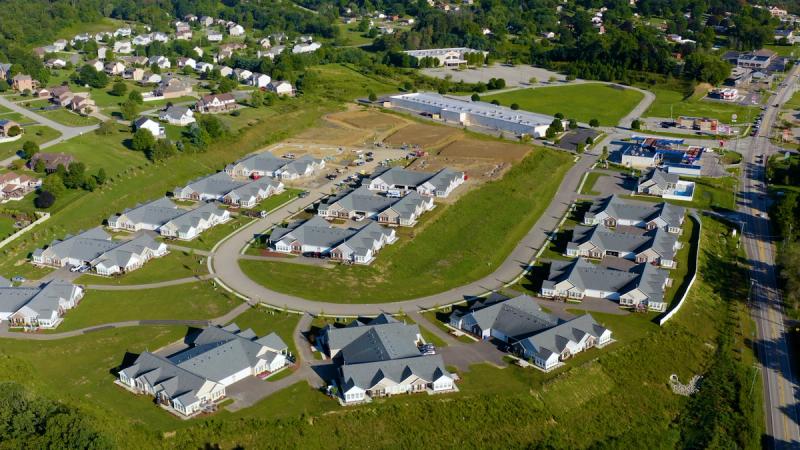
When Weaver Homes asked us to create a drone flyover for their Heritage Crossings community north of Pittsburgh, the goal was straightforward: give prospective buyers a sense of the full development — where it sits, how it's organized, what life there might actually look like. The challenge was capturing all of that in a way that felt inviting rather than just informational.
Starting with a shot list
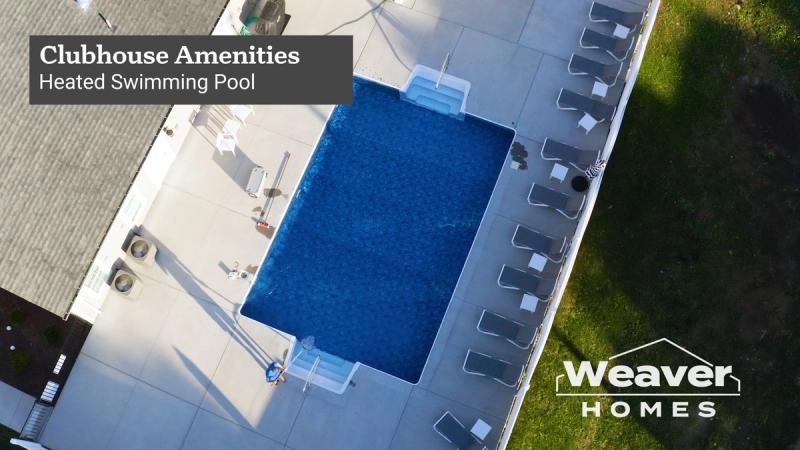
Pre-production on a drone flyover isn't just logistics — it's editorial. Before we flew a single foot of footage, we worked closely with the Weaver Homes team to build an approved shot list. For Heritage Crossings, three elements were non-negotiable: the construction progress on the newest phase of homes, the model homes already complete and move-in ready, and the heated community pool and clubhouse that serve as anchor amenities for the development.
Having that clarity before arriving on site meant every battery charge was spent deliberately. Drone flight time is finite, and improvising a shot list in the field is a fast way to miss what matters most.
The lighting window
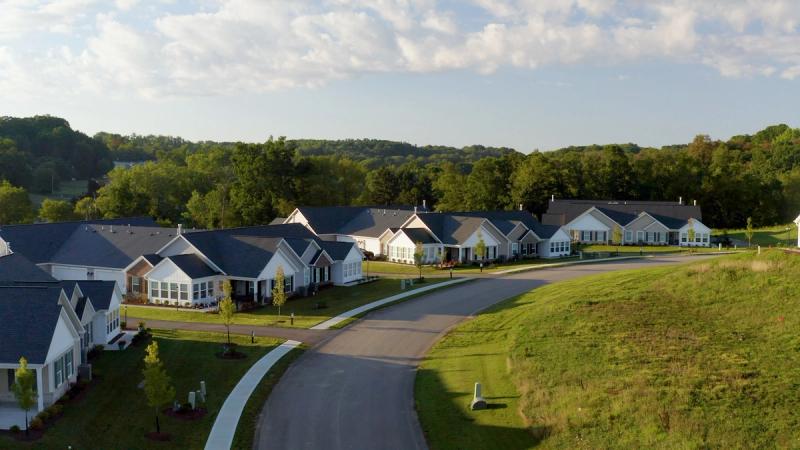
Weather and timing are the variables that separate adequate drone footage from footage that actually sells something. Overcast skies flatten everything — the color, the depth, the sense of life in a space. Harsh midday sun creates blown-out skies and deep shadows that make even well-designed homes look unflattering.
For Heritage Crossings, we found the right window about an hour after sunrise. The sun was high enough to cast clean light across the home facades and landscaping, but low enough that the sky stayed rich and the shadows remained soft. That quality of light — warm, directional, with texture — is what gives the footage its optimistic character. It makes a community look like somewhere people actually want to live.
We monitor forecasts carefully before scheduling any drone shoot and always build in a rain date. Natural light is the single most powerful tool in aerial video, and no amount of color grading fully recovers a flat, grey sky.
The editing process
The raw footage from a drone shoot is only half the work. In the editing phase for Heritage Crossings, we focused on three things: clip selection, music pacing, and color grading. Each clip was chosen not just for composition but for movement — the way a slow push down a street or a rising reveal over a roofline creates a sense of discovery that static images never can.
For a new home community video, graphic overlays serve a real purpose: they translate what viewers are seeing into information they can act on. We added animated call-outs identifying floor plan names, bedroom and bath counts, square footage, and amenity labels — all timed to appear as the relevant footage plays. Combined with Weaver Homes' branding throughout, the finished piece functions as both a cinematic introduction to the community and a practical sales tool.
What real estate drone video does well
Aerial video earns its place in a real estate or development marketing stack for a few specific reasons. It conveys scale in a way nothing else can. It establishes context — where a community sits relative to roads, greenspace, and surrounding neighborhoods. And it creates an emotional impression of a place before a prospective buyer ever schedules a visit, which means the people who do show up are already more invested.
For homebuilders, developers, and communities still under construction, it also solves a specific challenge: how do you sell a vision of what a development will become when half the homes aren't built yet? Aerial footage that shows construction progress alongside completed phases tells a story of momentum — this is real, it's happening, and here's how far along it already is.
As a Pittsburgh-based video production company with FAA-certified drone pilots, we work with homebuilders, developers, and real estate professionals throughout the region and beyond. If you have a community, property, or development that would benefit from aerial video, we'd love to hear about it.