
What Drone Footage Adds to a Wedding Film
When Zach arrived at Chanteclaire Farm in Friendsville, Maryland two hours before the ceremony started, the venue was empty. That was the point. Drones are loud, require a safety spotter, and need clear airspace — flying them during cocktail hour with guests nearby isn't the right call. The pre-ceremony window is when you get the shots that are impossible to recreate later.
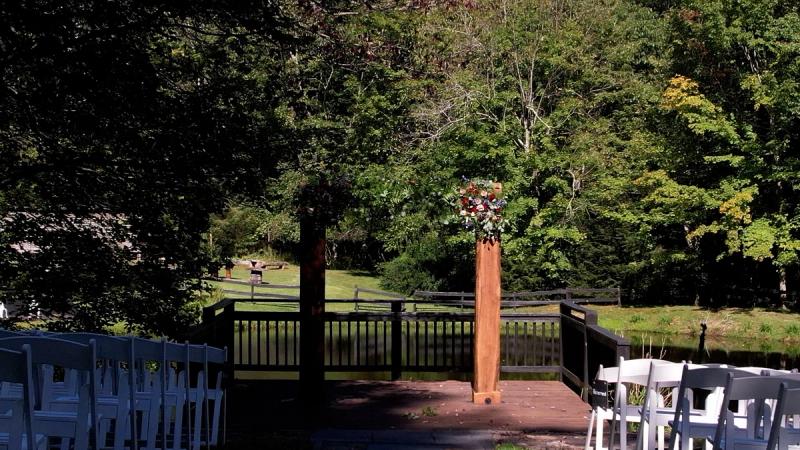
He started with the ceremony space itself — a hillside lawn with a clear sightline from the back of the aisle all the way to the altar. The drone started at the back and moved slowly forward, lowering as it approached the front to land with the altar centered in the frame. Two hours later, Jody would walk down that aisle. The establishing shot was already in the can.
That's what drone footage is really for in a wedding film — not spectacle, but context.
What aerial footage actually does
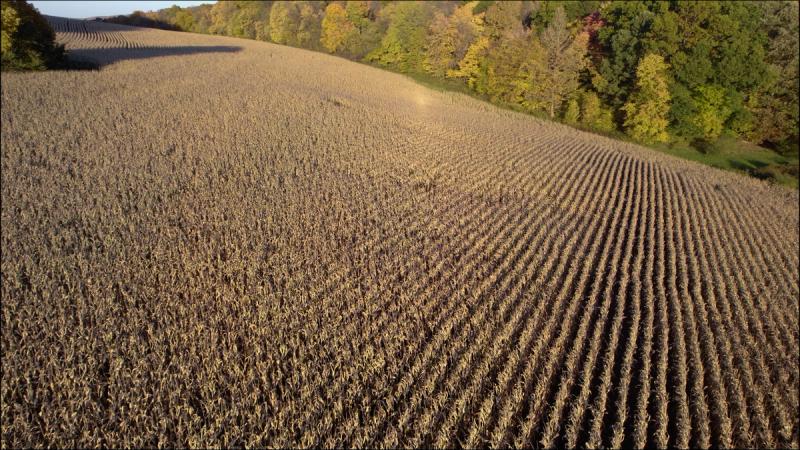
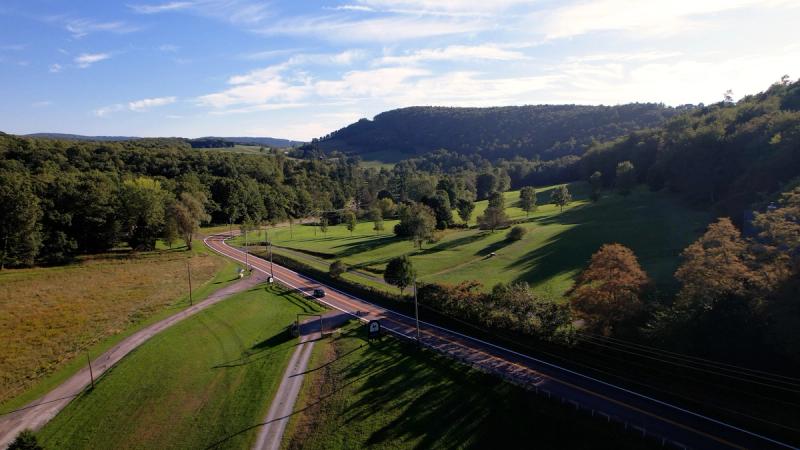
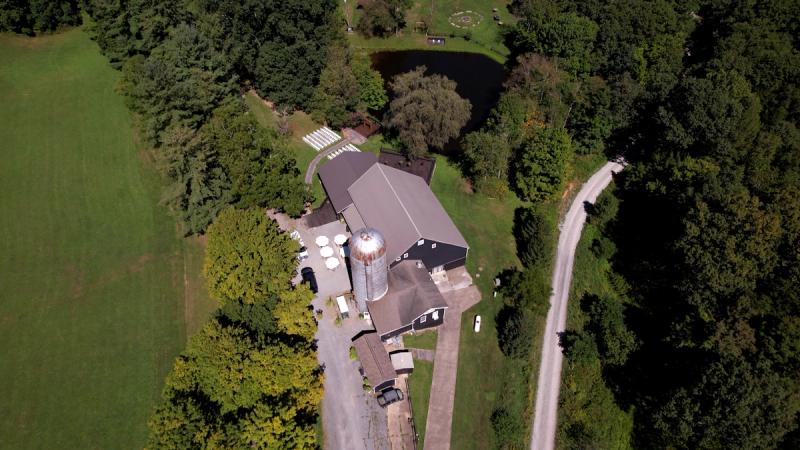
A drone gives a wedding film something ground-level cameras can't: a sense of where you are. Chanteclaire Farm sits just outside Deep Creek, Maryland, surrounded by mountains and open landscape. From the ground, you're inside it. From above the treeline, you can see the whole picture — the pond, the ceremony space, the cabins where the couple stayed, the mountains in every direction.
That establishing perspective does real work in a film. It tells the viewer where this story is taking place before it begins. And for a venue like Chanteclaire — where the location itself is part of what makes the day special — showing it from the air is the only way to fully honor it.
The pond shot
One of the more technically interesting shots from the Chanteclaire shoot came from flying low over the pond toward the ceremony chairs. By keeping the drone close to the water's surface, the reflection in the pond mirrors the frame above it — trees, sky, the approaching chairs — in a way that creates a natural symmetry. The propeller wash creates subtle ripples in the water that actually add to the movement rather than distracting from it.
It's the kind of shot that only exists because someone arrived early, flew carefully, and had enough time to find it.
What couples should know about drone work at weddings
Not every wedding venue or location is suitable for drone footage — airspace restrictions, proximity to airports, and local regulations all factor in. Commercial drone pilots are FAA Part 107 licensed, which means they've been trained on airspace rules and are legally permitted to fly for hire. That licensing matters: it's the difference between a professional who has studied the regulations and someone who bought a drone last month.
A professional drone operator will always fly with a spotter — a second person whose job is to maintain visual contact with the aircraft and monitor for anything that might require an immediate landing. At a wedding, that spotter also serves as the person who communicates with any guests who wander into the area during a flight.
Timing matters too. The best drone footage at weddings typically comes from early morning or pre-ceremony windows when the light is good and the venue is quiet — not from flying over a crowded cocktail hour.
Is it right for your wedding?
Drone footage isn't essential for every wedding film. For an urban venue, an intimate ceremony in a small chapel, or a reception that's entirely indoors, it may not add much. But for weddings at farms, estates, vineyards, waterfront venues, or anywhere with significant natural landscape — drone footage can be the difference between a film that documents a day and one that captures a place.
If you're planning a wedding and want to talk through whether aerial footage makes sense for your venue, we'd be glad to discuss it. You can also learn more on our wedding videography services page.