
How We Light Professional Video Interviews on Location
Every location presents a different set of challenges. The variables — window placement, ceiling height, wall color, ambient light sources — change every time. What doesn't change is the process we use to work through them.
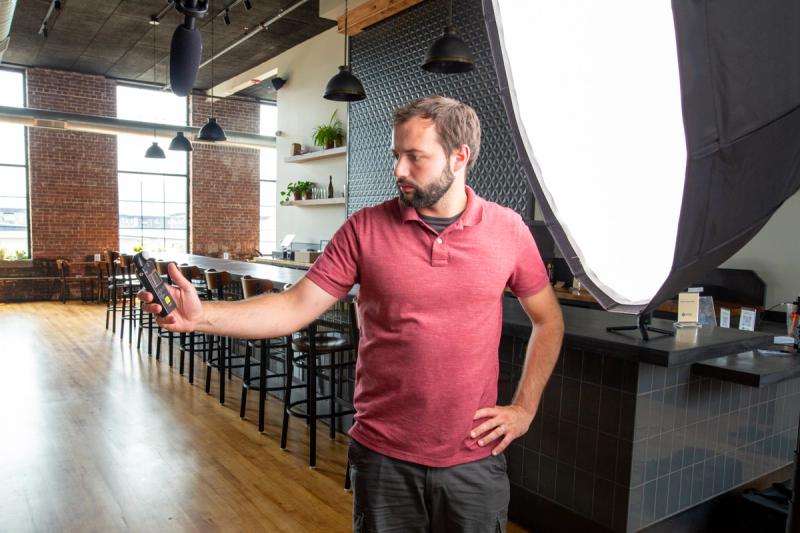
This behind-the-scenes video was shot during a marketing video production at a Pittsburgh brewery. The taproom had a lot going for it visually: exposed brick, industrial fixtures, a bar backdrop with tap handles. It also had large windows running along one side — which look beautiful but create an exposure problem. Window light shifts throughout the day, and consistency matters when you're filming multiple interviews across several hours. We metered the windows, assessed what we'd need to bring the interior up to match, and made the call to work with the windows rather than fight them.
The interior lights had to go first. Mixed overhead sources create color temperature problems that make skin tones difficult to correct in post — cutting them gives us a clean starting point to build from.
The lighting approach
Our key light for this shoot was the Godox VL150 — a daylight-balanced LED that matched well with the natural light coming through the windows. We attached a softbox to broaden the light source and create soft, flattering illumination on the subject's face. We also tested a honeycomb grid over the softbox to control spill, but found that the exposure loss wasn't worth the trade-off in this particular space, so we pulled it.
Getting the key light as close to the subject as possible — just outside the camera frame — is one of the most important moves in interview lighting. Proximity to the light source increases its apparent size relative to the subject, which softens shadows and produces more natural-looking skin tones.
Contrast ratio
One of the more nuanced decisions in interview lighting is how much contrast to allow between the lit side and the shadow side of the face. Too little contrast — an even exposure across both sides — flattens features and kills depth. Too much contrast creates a dramatic look that may not suit the intended use.
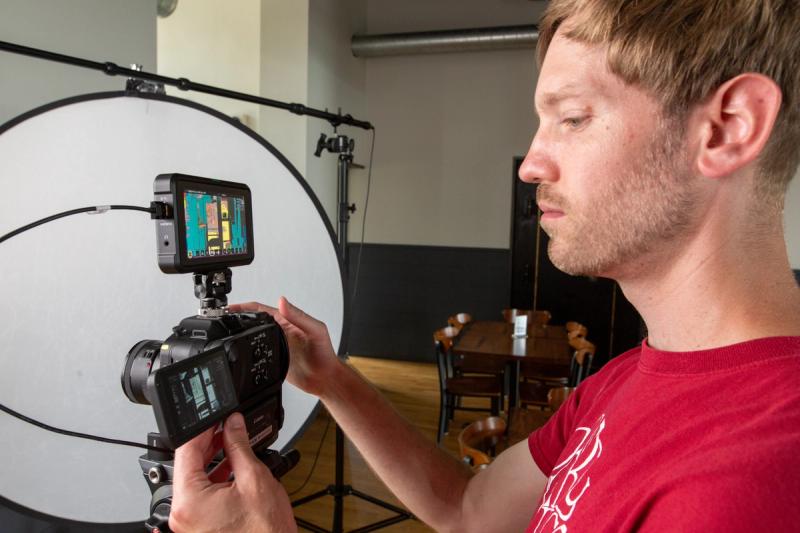
For a brewery marketing piece, a moderate amount of contrast felt right — enough mood to suit the environment, not so much that we were losing definition. We metered the key and fill sides of the face and found about a two-and-a-half stop difference — more than we wanted. Rather than add a second light source, we used a bounce reflector on a C-stand to redirect some of the key light back onto the shadow side, bringing the contrast ratio down to around one and a half stops.
Separation from the background
One of the principles that separates professional interview footage from amateur footage is subject separation — the visual distinction between the person and what's behind them. In this case, the windows in the background were actually working in our favor: they provided natural rim lighting on the fill side of the subject's shoulder, which helped push them forward in the frame.
The distance between subject and background also matters. The further a subject sits from the background, the more depth the image has — and the more a shallow depth of field can do to isolate them from their surroundings.
The finished interviews from this shoot ended up in Old Thunder Brewing Company's marketing video — worth watching to see how the lighting translates to the finished piece.
If you're planning a video project that involves on-camera interviews and want to talk through what professional production looks like, we'd love to hear from you.