
Using Videos for Recruitment: A Winning Strategy for Your Organization
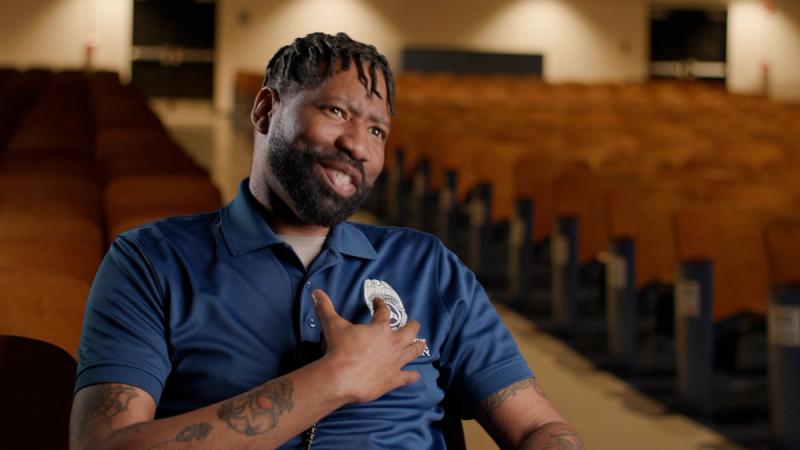
One of the school safety officers in our video for the School District of Philadelphia's Office of School Safety opens with this: he was getting ready for work one morning, news playing in the background, and every day it was the same — teens being hurt, everything negative. And then: "I said, you know what, I'm gonna make a change. If I could change one person, that'd be great. If I could change 20, if I could change a hundred — I'm gonna make a difference and make sure that these kids are safe."
That's a recruitment video. Not because it's selling the job, but because it's telling the truth about why the job matters. Any candidate watching that clip who feels something — who thinks that's the kind of work I want to do — is exactly the right person to be applying.
That's what video does that nothing else can.
Why recruitment video works
Most job postings describe a role. The best recruitment videos reveal a calling.
There's a meaningful difference between telling a candidate what they'll be doing and showing them who they'll become in the process. One of the officers in the Philadelphia video talked about a former mentee who came back years after graduation — now the director of African American Male Engagement for the Mayor's office. "That I find to be the most rewarding part of my job," he said. Another described the rewards of the work as being "found in places you never would've thought to look."
No bullet point in a job description captures that.
What recruitment video communicates that text can't
The real culture, not the stated one. Every organization says it has a great culture. Video is where you prove it. When candidates watch real employees talk about what the work actually means to them — without a script, without polish — they're getting information that a careers page simply cannot provide.
Who already works there. People make decisions about fit based on people. A candidate watching your recruitment video is quietly asking: do I see myself here? Do these people seem like my kind of people? Do they seem like they believe in what they're doing? Video answers those questions directly.
Why the role matters beyond the job description. Especially for mission-driven organizations — nonprofits, school districts, healthcare institutions, public agencies — the "why" behind a role is often the most powerful recruiting tool you have. Video is the medium best suited to carry that weight.
What it feels like to succeed in the role. The Philadelphia video doesn't just describe what school safety officers do — it conveys what it feels like to do it well. The pride, the relationships, the long-term impact. That emotional texture is what turns a curious candidate into a motivated applicant.
Who this works for
Recruitment video is particularly powerful for organizations where the work is relational, mission-driven, or difficult to convey on paper. School districts, universities, hospitals, nonprofits, government agencies, and purpose-led businesses all have something in common: the people doing the work care deeply about it, and that shows on camera.
If your organization struggles to attract candidates who are genuinely aligned with your values — not just qualified on paper — video is often the missing piece. It filters in the right people and filters out the wrong ones before a single interview is scheduled.
What makes a recruitment video worth watching
The difference between a recruitment video that moves people and one that gets skipped comes down to one thing: are real people saying real things?
That means choosing voices that have something true to say — not the most polished spokesperson, but the person whose story actually captures what the role is. It means giving interviews room to go somewhere unexpected. It means resisting the urge to over-produce, over-script, or turn something human into something corporate.
The officer who said he's "kind of sad" that his eighth graders are leaving next year, that they've promised to stay in touch — that moment isn't in any recruitment brief. But it's the moment that makes a candidate lean forward.
That's what we're looking for when we make these films. And that's what makes them work.